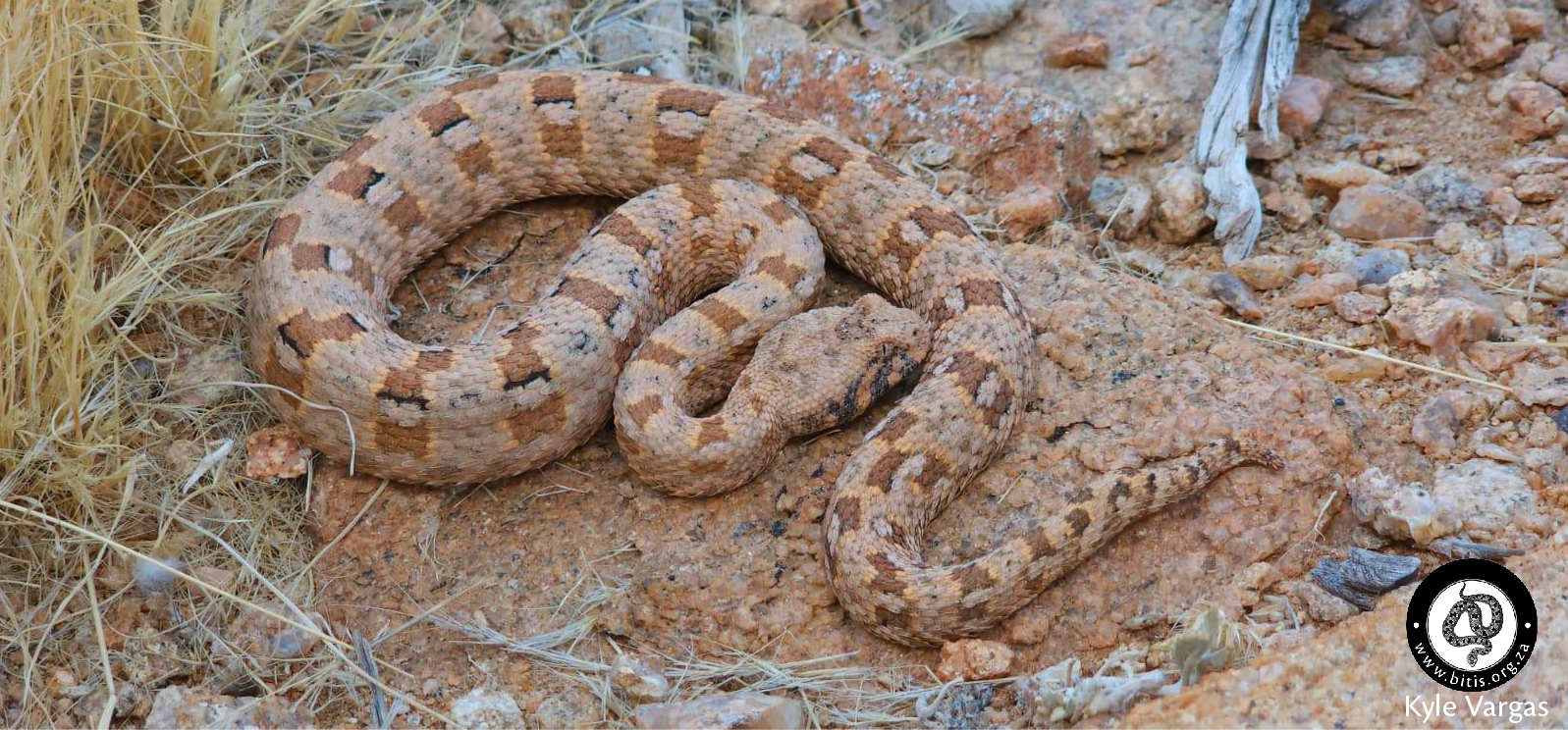
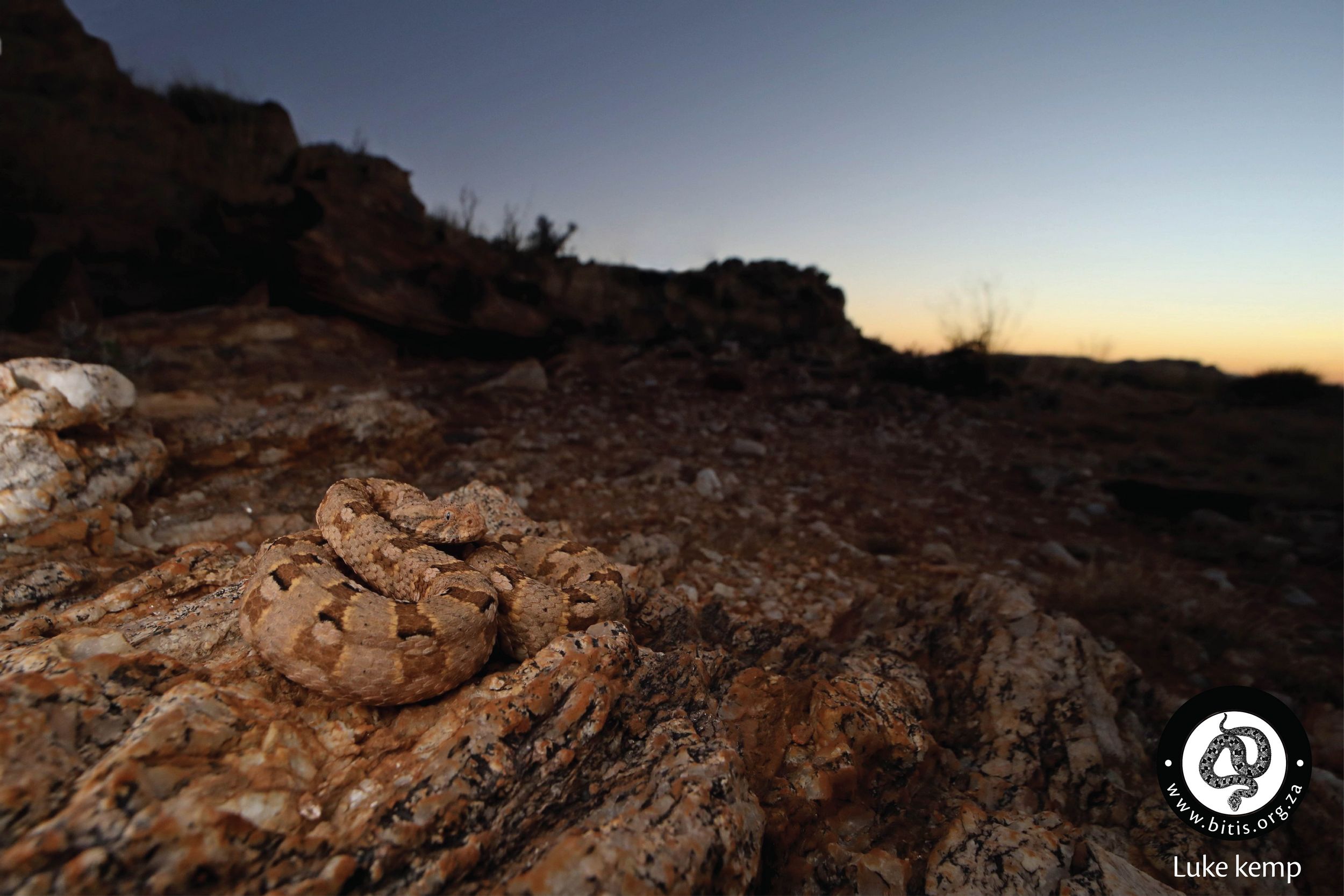
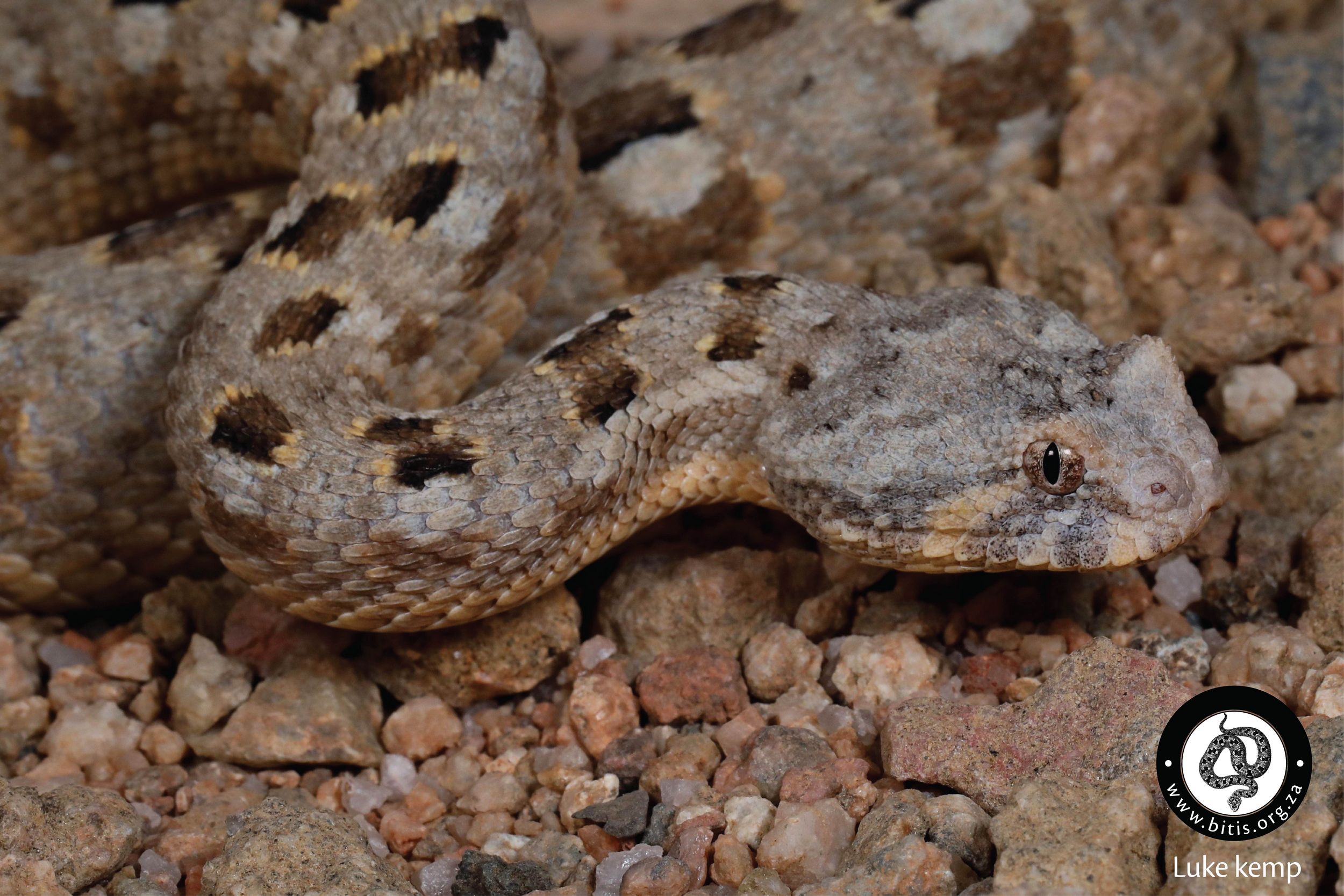
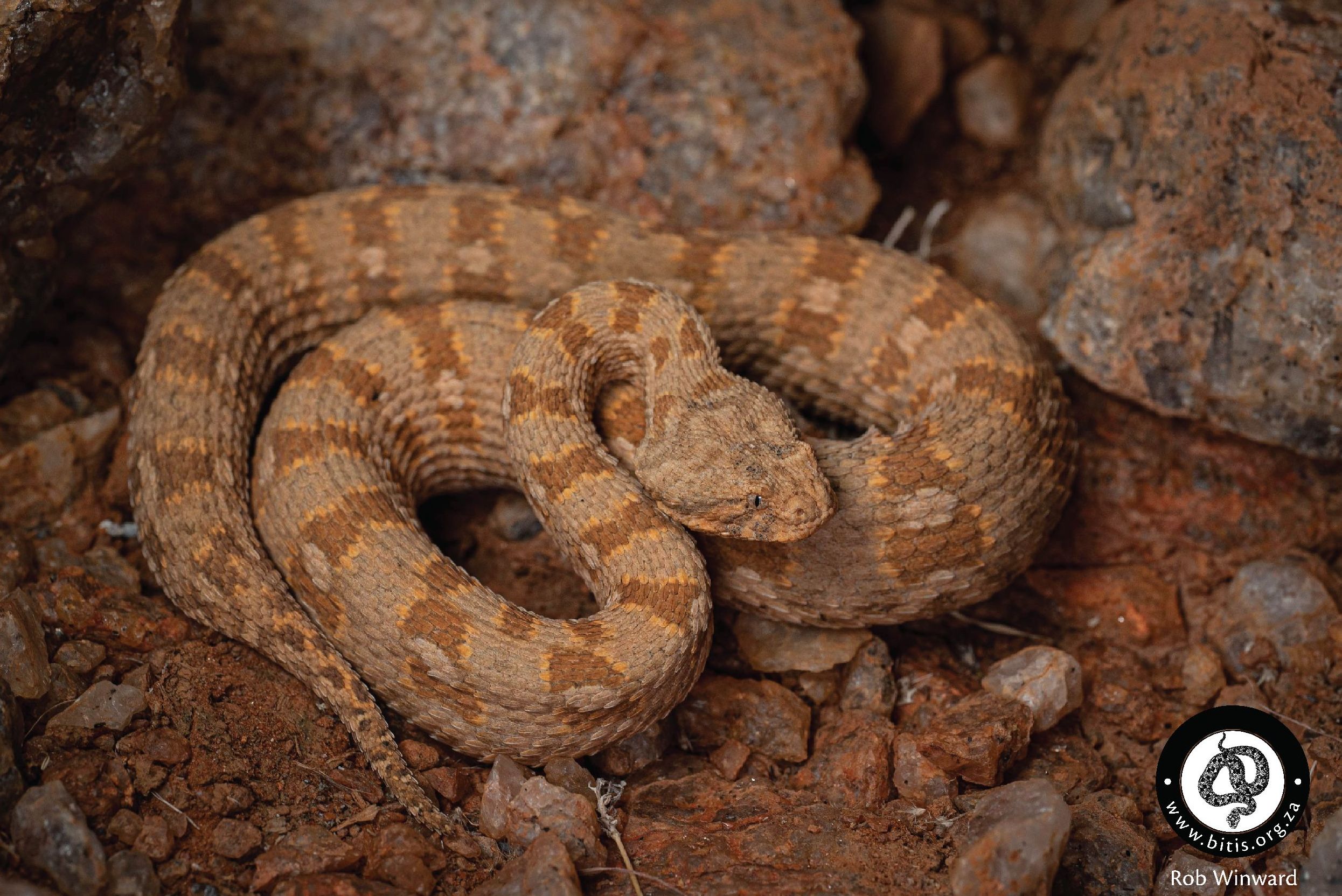
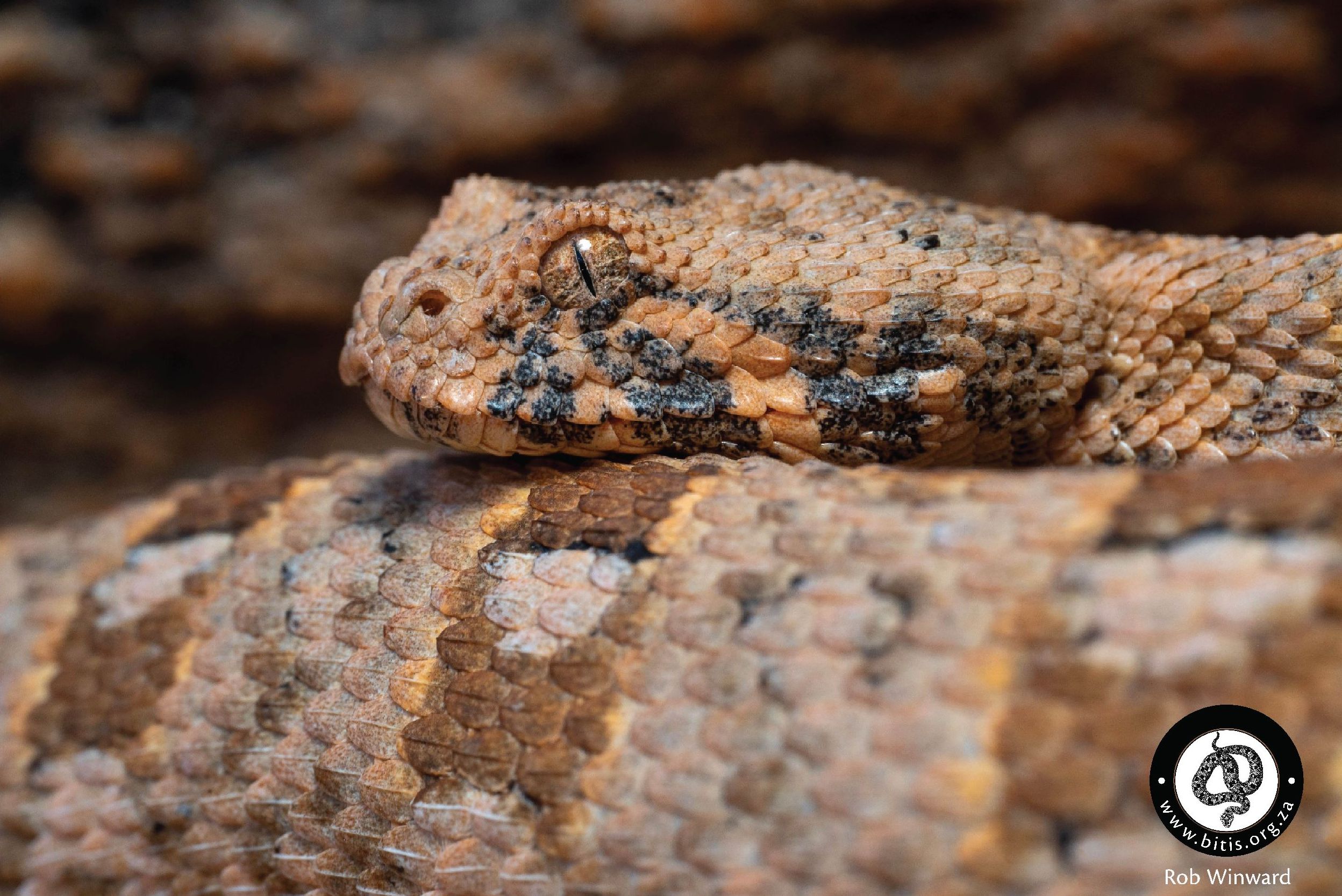
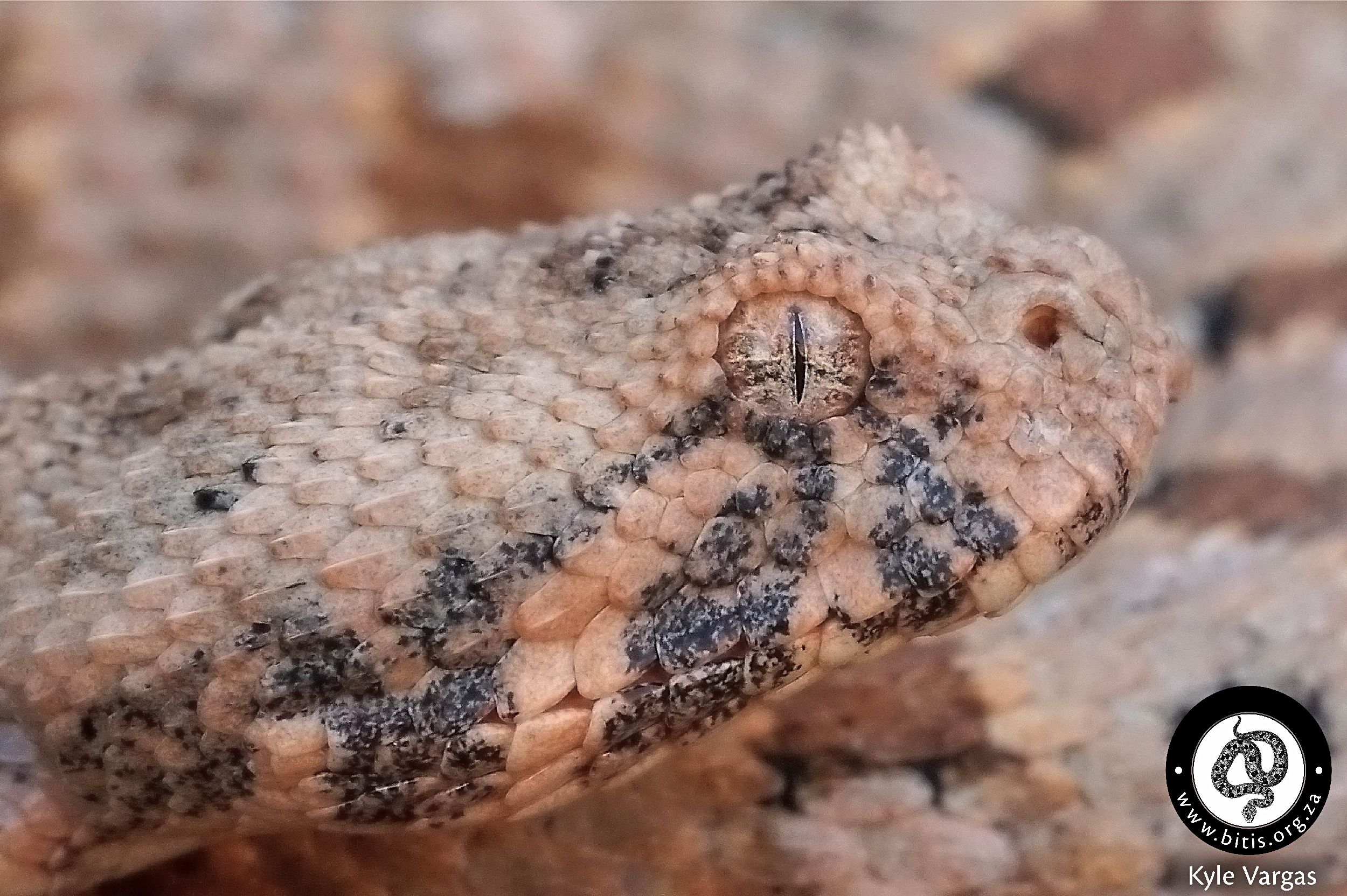
Type specimen – Holotype TM42305 male collected by A. Maritz on the farm Dreikammberg on the north bank of the Orange River, Lüderitz district, Namibia. The specimen is currently housed at the Ditsong Museum (previously the Transvaal Museum) in Pretoria, South Africa.
Etymology – The name Xeropaga comes from the Greek xëros meaning dry land and paganus meaning dweller
Bitis xeropaga - Bushmanland
Species history – During a collection trip in 1968 in the south-western corner of Namibia, a hornless Bitis was collected on a rocky hillside near Rosh Pinah Mine. It was decided that a further series of this undescribed form should be collected and compared to the sympatric Bitis caudalis. By 1975, 27 individuals had been collected in southern Namibia and the Northern Cape Province of South Africa. Dr Wulf Haacke, head of herpetology at the Transvaal Museum (now Ditsong Museum), described the species in 1975. Surprisingly, a Bitis collected by Dr P. Range at Kuibis, Namibia and misidentified as Bitis peringueyi by Nieden (1913) is actually the earliest record of Bitis Xeropaga.
Description – a large dwarf adder exceeding 60 cm. The colours are variable and generally match the rock colour in the area. The body may be yellow to pink or light to dark grey. There are paired dark squares down the back that may fuse. Each square is bordered by a pale circle with another dark square below it on the sides of the body. The squares are usually edged in lighter yellow or orange. There may be some dark mottles on the head and usually some light pink to beige on the front of the head, around the eyes and forming two bars below the eyes.
Natural habits – A large dwarf adder with the biggest female measuring 61 cm in length. This species appears to favour sparsely vegetated, rocky hillsides and mountain slopes. It climbs rocks very well and often takes shelter in low rock cracks or under dead vegetation. It is incredibly well camouflaged and generally has a similar colour to the dominant rock colour in the area. It is active early mornings and late evenings and into the night, when temperatures are lower.
Venom – not much is known about the venom. Two known bites resulted in swelling and pain and discolouration and necrosis in one bite. This suggests it is very similar to most other dwarf adders being largely cytotoxic.